
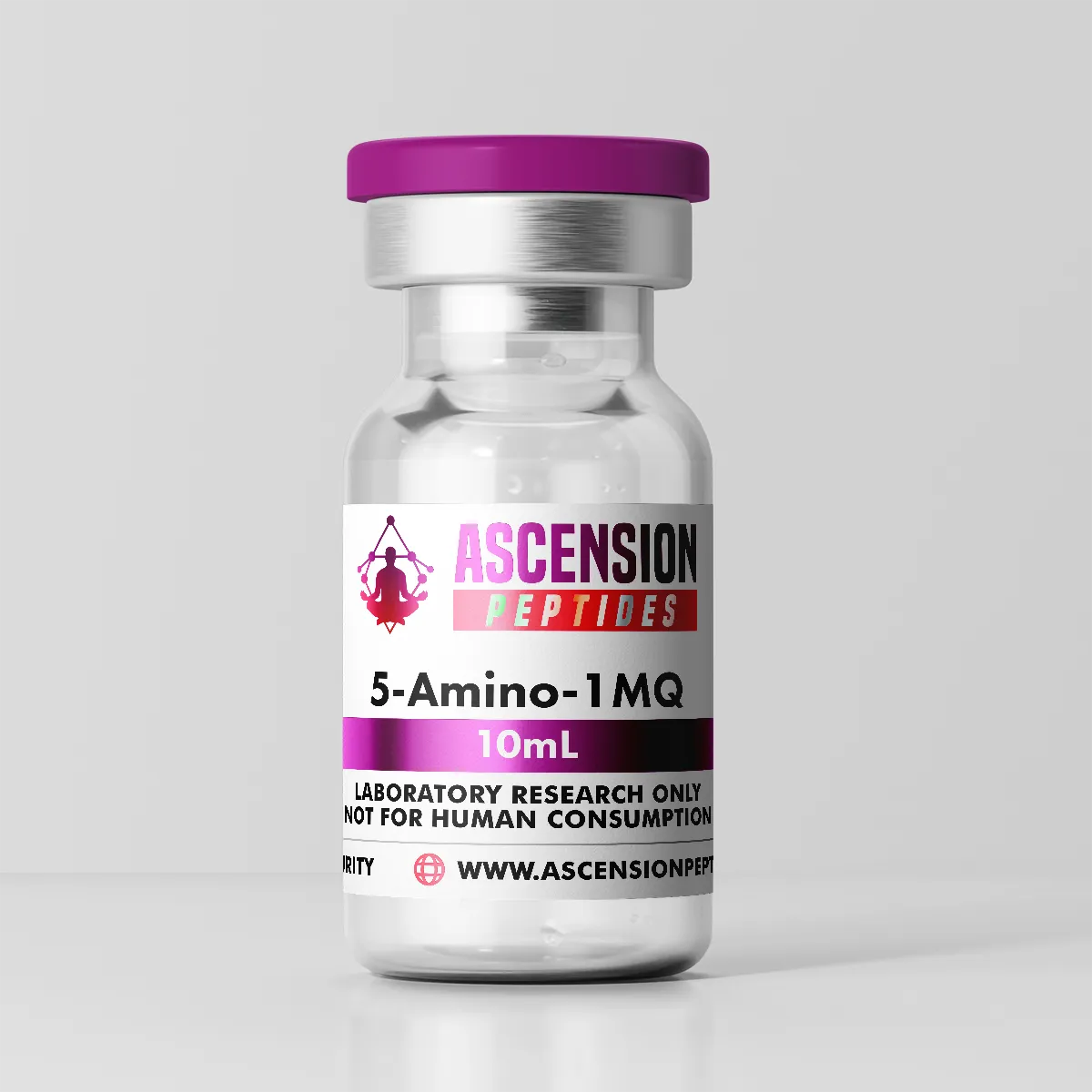
Overview of 5-Amino-1MQ (10mg)
5-Amino-1MQ (5-Amino-1-Methylquinolinium) is an innovative, membrane-permeable small-molecule research compound that has gained significant attention in metabolic, cellular, and longevity science. Unlike classic metabolic peptides, 5-Amino-1MQ functions via direct enzyme inhibition. It selectively blocks Nicotinamide N-Methyltransferase (NNMT), an enzyme predominantly overexpressed in white adipose tissue and aging skeletal muscle.
In preclinical models, elevated NNMT activity depletes nicotinamide and consumes crucial methyl groups, impairing cellular energy regulation. By inhibiting NNMT, 5-Amino-1MQ prevents this metabolic sink, effectively directing nicotinamide into the NAD+ salvage pathway. This leads to increased cellular energy expenditure, enhanced fatty acid oxidation, and improved metabolic markers without acting on central nervous system appetite pathways.
Mechanisms of Action and Research Applications
Researchers investigate 5-Amino-1MQ across a broad spectrum of physiological and metabolic protocols:
-
NAD+ Salvage Pathway Preservation: By blocking NNMT-mediated methylation, 5-Amino-1MQ conserves nicotinamide, which is subsequently converted into NMN and NAD+. This offers a novel approach to boosting intracellular NAD+ levels without relying solely on precursor loading.
-
Adipose Tissue Regulation: Preclinical research indicates that 5-Amino-1MQ reduces white adipose tissue mass and adipocyte size by enhancing cellular basal metabolic rate rather than altering caloric intake.
-
Skeletal Muscle and Endurance: Recent animal studies demonstrate that NNMT inhibition supports skeletal muscle endurance, protein synthesis, and cellular repair mechanisms in aged and fatigued tissue models.
Comparing Complementary Metabolic Compounds
In modern experimental design, research teams frequently examine how NNMT inhibitors interact alongside advanced multi-receptive peptide protocols. For instance, laboratories running multi-pathway metabolic protocols often explore synergistic effects by pairing non-hormonal small molecules with incretin mimetics:
-
Synergy with Incretin Therapies: While multi-agonist peptides target gut-brain axis signaling and appetite suppression, 5-Amino-1MQ operates locally within tissue cells to boost basal energy expenditure.
-
Acquisition & Protocol Design: When designing comprehensive research programs, determining how to buy retatrutide peptide or source peptide partners retatrutide alongside complementary small molecules like 5-Amino-1MQ requires verifying analytical testing protocols and vendor reliability.
-
Sourcing Guidance: Primary investigator inquiries such as how to get reta peptide or finding a trusted platform for r3ta peptide buy protocols center on finding verifiable HPLC/MS purity standards. Knowing how to buy retatrutide peptide from reliable providers ensures that researchers receive research-grade materials suitable for precise co-administration testing.
Dosage, Reconstitution, and Analytical Handling
Precise execution of research protocols relies on careful handling, accurate reconstitution, and understanding specific compound dynamics:
-
In Vitro Protocols & Calculated Strengths: Laboratory studies typically evaluate NNMT inhibition at specific micro-molar concentrations. When scaling models to evaluate compound kinetics or analyzing a retatrutide dose response curve alongside 5-Amino-1MQ, precise volumetric dilution with high-grade Bacteriostatic Water or sterile saline is essential.
-
Observational Side-Effect Profiles in Models: During research into advanced multi-target agonists, investigators meticulously record potential physiological responses, including transient sensory alterations such as dysesthesia retatrutide observations. Understanding these parameters ensures controlled, measurable experimental outcomes.
-
Where to Source Research Material: Determining peptide retatrutide where to buy alongside 5-Amino-1MQ requires confirming that vendors provide lot-specific documentation, Certificates of Analysis, and transparent purity verifications.
Storage & Handling Guidelines
To maintain maximum stability and prevent degradation:
-
Lyophilized Form: Store unopened vials in a freezer at −20°C, protected from light and moisture.
-
Reconstituted Solution: Once reconstituted, store the liquid solution under refrigeration at 2°C to 8°C and utilize within institutional standard operating procedures.
-
Avoid Free-Thaw Cycles: Aliquot reconstituted solutions to prevent repeated freezing and thawing cycles.
Product Specifications
-
Chemical Name: 5-Amino-1-Methylquinolinium
-
Molecular Formula: C10H11N2+
-
CAS Number: 42464-96-0
-
Purity: ≥98% (HPLC)
-
Form: Lyophilized Crystalline Powder
-
Net Quantity: 10mg per vial
Disclaimer & Research Use Only
This product is strictly supplied for qualified laboratory research, analytical testing, and scientific investigation. It is NOT intended for human or veterinary consumption, medical treatment, or diagnostic applications. All handling must be conducted by qualified personnel using appropriate laboratory safety protocols.
For a quick breakdown of how 5-Amino-1MQ works to preserve NAD+ levels through NNMT inhibition, you can watch How 5-Amino-1MQ Keeps NAD Working Longer, which provides a concise visual explanation of the molecule’s mechanism of action.
Reviews
There are no reviews yet.